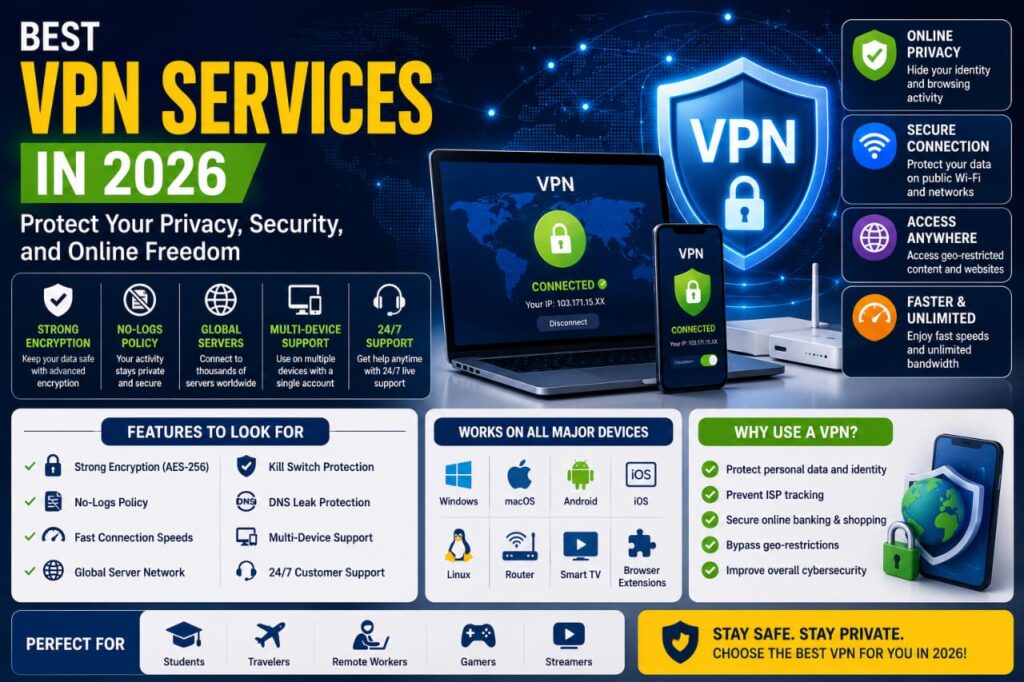

Best VPN Services in 2026: Protect Your Privacy, Security, and Online Freedom
Online privacy has become one of the biggest concerns for internet users worldwide. In 2026, Virtual Private Networks (VPNs) continue to play a crucial role in protecting personal information, securing internet connections, and maintaining online freedom.
Whether you are browsing on public Wi-Fi, accessing sensitive information, or simply wanting more privacy online, a reliable VPN can significantly improve your digital security.
What Is a VPN?
A Virtual Private Network (VPN) creates a secure encrypted connection between your device and the internet. This encrypted tunnel helps protect your data from hackers, advertisers, and other third parties.
VPN technology helps users:
- Protect personal information
- Secure public Wi-Fi connections
- Hide IP addresses
- Improve online privacy
- Reduce tracking
- Access global content securely
Why VPN Usage Is Growing in 2026
As cyber threats become more sophisticated, individuals and businesses are increasingly turning to VPN services for protection. Privacy regulations, remote work, and growing cybersecurity awareness have accelerated VPN adoption worldwide.
Key Benefits of Using a VPN
Enhanced Security
VPN encryption protects sensitive information such as passwords, banking details, and personal communications.
Privacy Protection
VPNs help reduce tracking by masking your IP address and encrypting browsing activity.
Safe Public Wi-Fi Usage
Public networks often present security risks. VPNs add an additional layer of protection when using airports, hotels, cafes, and public hotspots.
Important Features to Look For
- Strong encryption standards
- Fast connection speeds
- No-logs policy
- Global server network
- Multi-device support
- Kill switch protection
- DNS leak protection
- 24/7 customer support
VPNs for Remote Workers
Remote work remains popular in 2026. VPNs allow employees to securely access company systems and sensitive business data from virtually anywhere.
Business advantages include:
- Secure file access
- Protected communications
- Reduced cyber risks
- Safer remote collaboration
VPN Security Technologies
Modern VPN providers use advanced security technologies including AES encryption, WireGuard protocols, multi-factor authentication, and secure DNS systems.
These technologies help ensure that data remains protected during transmission.
Common VPN Myths
- VPNs do not make users completely anonymous.
- Free VPNs are not always secure.
- VPNs do not replace antivirus software.
- Not all VPN providers offer the same level of protection.
How Businesses Use VPNs
Organizations use VPN solutions to secure internal systems, protect customer data, and ensure safe communication between distributed teams.
VPN technology remains an essential component of modern cybersecurity strategies.
Choosing the Right VPN Provider
When selecting a VPN service, consider security standards, speed, privacy policies, independent audits, customer support, and overall reputation.
- Security features
- Server coverage
- Performance
- Pricing
- User reviews
- Privacy policies
Future of VPN Technology
VPN providers continue to invest in faster protocols, stronger encryption, and improved privacy technologies. As cyber threats evolve, VPN solutions are expected to become even more sophisticated and accessible.
Final Thoughts
VPN services remain one of the most effective tools for improving online privacy and digital security. Whether for personal use, remote work, or business operations, a quality VPN can help protect sensitive information and provide greater peace of mind online.
In 2026, investing in strong cybersecurity tools such as VPNs is no longer optional for many internet users—it is an essential part of staying safe in a connected world.